Tag: POCT

  • RAMP COVID-19 antigen test gets Health Canada approval

    Response Biomedical’s RAMP COVID-19 antigen test gets Health Canada approval.

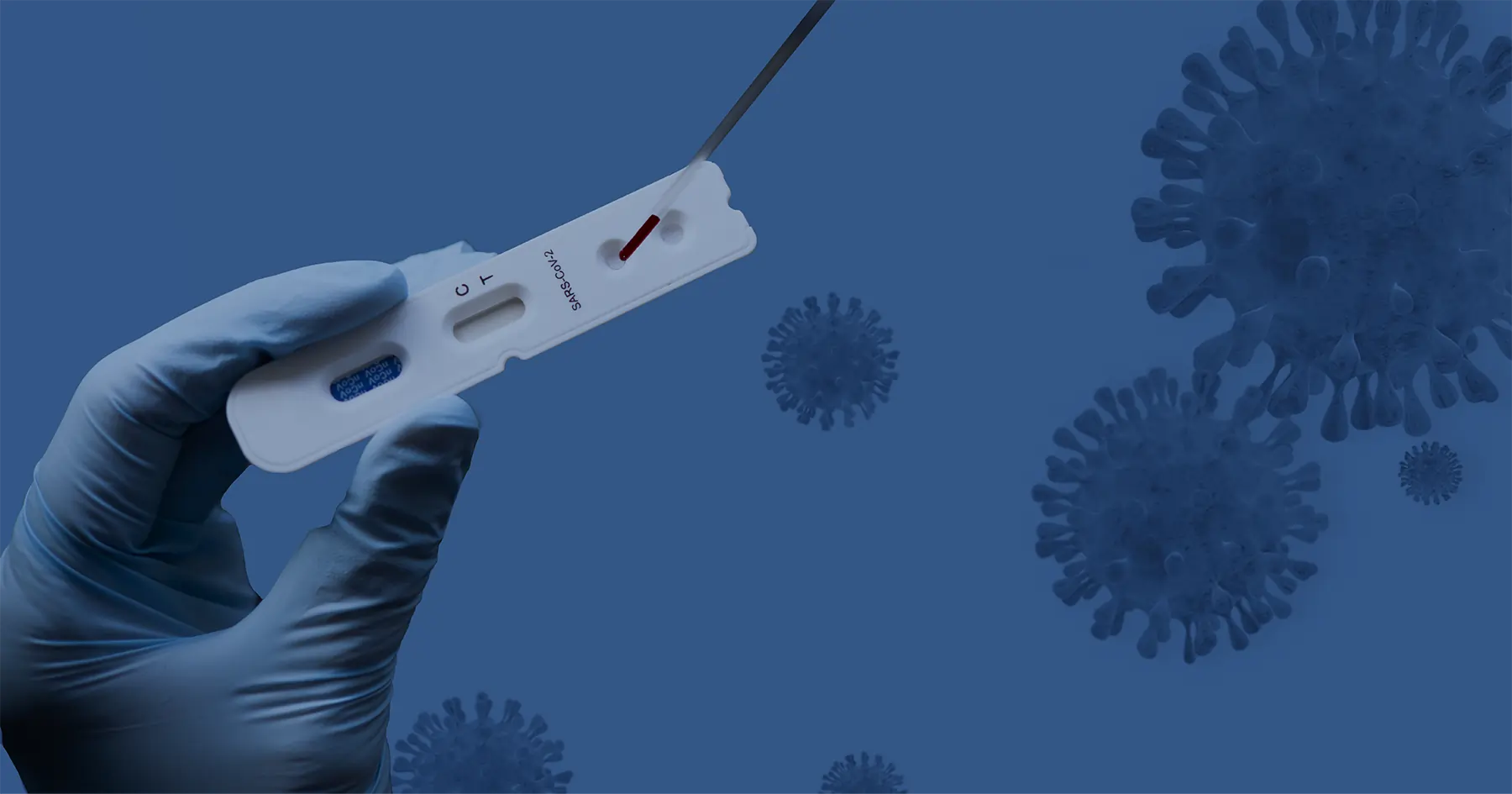
    Response Biomedical Corp. (Response), a global provider of acute care diagnostic testing solutions, is announcing today that Health Canada has granted the RAMP® COVID-19 Antigen Test authorization to commercialize under the Emergency Use Interim Order. The Health Canada authorization allows Response to market and sell the RAMP® COVID-19 Antigen Test to countries that recognize Health Canada authorization.

    The RAMP® COVID-19 Antigen Test uses the RAMP® 200 instrument for the detection of SARS-CoV-2 nucleoproteins in nasal swabs from individuals who are suspected of having COVID-19 infection within the first 5 days of symptom onset. The results are delivered in 15 minutes, enabling timely decision-making for healthcare professionals and on-site identification of COVID-19. The test kit contains all required components, including the nasal swabs, to allow for the rapid triage of individuals suspected of SARS-CoV-2 infection.

    The RAMP® instrument is a small, automated system capable of storing and transmitting results digitally. The RAMP 200 offers complete traceability and reportability with the flexibility of running one to six tests at a time. 

    “As a global provider of acute care tests, it was imperative for us to join the fight against the pandemic for Canada. The addition of the COVID-19 Antigen Test on our RAMP platform completes our panel of tests that have been used globally in the fight against COVID-19 since the start of the pandemic.” stated Dr. Barb Kinnaird, CEO of Response.

    “At the onset of the pandemic, NGen mobilized funding to support made-in-Canada solutions to combat COVID-19,” said Jay Myers, CEO, NGen. “We are pleased to see that Response Biomedical’s RAMP COVID-19 antigen test has been recognized by Health Canada as a critical tool in our arsenal to protect the health and well-being of Canadians.”

    Health Canada’s decision is under Health Canada’s expedited authorization pathway, Interim Order No. 3. As a part of the authorization process, clinical data gathered from prospective clinical studies were included in support of the RAMP COVID-19 Antigen test performance against recognized PCR lab-based tests. The test was developed with advisory support and research and development funding from the National Research Council of Canada Industrial Research Assistance Program (NRC IRAP).

    About Response Biomedical Corporation

    Response Biomedical Corp. (Response) is a Canadian manufacturer and global supplier of diagnostic tools that aid in the diagnosis of life-threatening diseases. Response focuses on providing lab quality results in minutes and our RAMP® technology delivers a total solution for making better, faster decisions. RAMP® tests are commercially available to aid in the diagnosis of heart attack, congestive heart failure, sepsis, pregnancy and more. The company is passionate about the patient’s experience and our core purpose to save lives globally. For more information about Response, visit www.responsebio.com.

  • Understanding Acute Care Diagnostics From The Healthcare Worker’s Point Of View: Lessons Learned During the Pandemic

    Since the pandemic, we’ve seen a surge in the interest and adoption of acute care diagnostics. There’s little doubt some of this interest can be contributed to COVID-19 rapid antigen testing. During the first waves of infection, central laboratory testing facilities were overwhelmed. That meant healthcare workers, technicians, and field workers had to become more familiar with rapid testing.

    There is now a CDC guidance on the use of rapid antigen tests. This guidance has helped accelerate development of less costly healthcare delivery and rapid tests that can be completed at the bedside. In our article below, we discuss three key learnings that have developed since healthcare workers have gained more first-hand experience with Point of Care (POC) testing during the pandemic.

    Three Acute Care Diagnostic Lessons Learned from the Pandemic

    1. Pandemic Acute Care Diagnostics Have Room to Grow

    In a study in Analytica Chimica Acta, Micaela Everitt et al suggest that the testing needs of a pandemic differ from that of an everyday setting. The scale at which tests must be manufactured, the amount of staff to train, and the type of sample required took many in the acute diagnostics industry by surprise. The fast spread of the virus required a rapid approach, but the industry wasn’t ready.

    According to Micaela, early in the pandemic “no commercial products were available to deliver rapid results or enable testing in the field.” They further explain that the biggest hindrance to assay performance is the sample preparation. Because poor accuracy is often due to how the sample is collected, it would be ideal to have automatic sample preparation.

    Although reverse transcription-polymerase chain reaction (RT-PCR) tests are considered the gold standard in detecting the SARS-CoV-2 antigen, adapting the technology in a rapid test format is not easy. The need for thermal cycling to amplify the genetic material is difficult to replicate in a portable device.

    The development of rapid, POC molecular diagnostic tests and immunoassays with sensitivity comparable to RT-PCR tests are what companies like Response Biomedical are aiming to achieve.

    2. Training Is Crucial to Test Expansion

    Early in the pandemic, the WHO made it clear that testing for SARS CoV-2 was absolutely necessary. Temporary POC testing sites collect hundreds of samples a day that are a critical measure to monitor the spread of COVID-19.

    In the Association of Public Health Laboratories blog, they detail the unique challenges the pandemic brought to parts of the world that had little experience setting up multiple pop-up testing facilities and training lay staff. As an example of the expansion that took place across North America, in one year the state of Wisconsin increased its testing capacity over 1500% (from 3,482 tests a day to 59,237 tests).

    To maintain test accuracy and the safety of their staff, the Milwaukee Health Department implemented a state-wide plan. The four key areas of their strategy were:

    • Team Selection
    • Training
    • Tools
    • Outreach

    By providing the right tools and roles from the beginning, they were able to retain a high level of efficiency. Also, because POC laboratory operators may have no laboratory experience, they turned to the Clinical Laboratory Improvement Amendments (CLIA) regulations for exemplary training and guidance.

    3. Rapid Testing can Help Relieve Pressure on Hospital Staff

    During spikes in infection, tremendous pressure is put on hospital emergency wards. This isn’t just because of an influx in patients. Laboratory testing delays can have an effect on patient care.

    This isn’t necessarily anything new. In their 2012 book, Point-of-Care Testing: Making Innovation Work for Patient-Centered Care, Chris Price and Andrew St John describe a healthcare system that still feels relevant nearly a decade later. They mention that “the core of good healthcare is centered on the patient supported by healthcare professionals.” The physician-patient relationship is a cycle of “assess-decide-act.” Acute care diagnostics are one potential way to speed up this cycle.

    Some of the benefits of POC testing they mention are as follows:

    • Health promotion
    • Reducing unnecessary referrals to hospital
    • Reducing the length of stay in hospital
    • Improving the quality of care following discharge to reduce the number of readmissions

    The use of rapid COVID-19 antigen tests allows for faster bedside patient response. While the potential for false negatives is much higher than RT-PCR tests, a 15-minute turnaround time helps healthcare providers reduce how many tests they send to the labs for processing. That way, healthcare providers can make faster decisions and reduce length of stay in hospital.

    Acute Care Diagnostic Innovation on the Horizon

    With the pandemic in its second year, the need for scalable testing and more accurate rapid tests is still very much a concern. The lessons we learn from this healthcare crisis will help us improve rapid antigen testing moving forward.

    If you’re interested in learning how you can make accurate and fast patient care decisions with our rapid testing and acute care diagnostic solutions, contact us today.


    Discover Our Rapid Testing Solutions
  • NT-proBNP in patients with COVID-19

    NT-proBNP in patients with COVID-19

    As a medical device manufacturer, Response Biomedical (RBM) has been closely monitoring the research regarding the detection of SARS-CoV-2. RBM’s core purpose is to improve and save lives globally and we strive to provide our channel partners with the most recent and relevant market information.

    The World Health Organization (WHO) affirmed Coronavirus Disease 2019 (COVID-19) as a public health emergency of international concern and declared it as a pandemic on 11 March 2020.1

    As the cases have increased so has the clinical, diagnostic, and scientific information available to help in the fight against COVID-19. One clinical finding discovered that cardiac injury is a common complication of COVID-19 and is present in up to 19.7% of patients who are hospitalized.2 Additionally, a meta-analysis of the association between NT-proBNP and mortality in patients with COVID-19 found that elevated NT-proBNP levels were associated with increased mortality in patients with COVID-19 pneumonia.3 Furthermore, the American College of Cardiology issued the following statement: “Natriuretic peptides are biomarkers of myocardial stress and are frequently elevated among patients with severe respiratory illnesses typically in the absence of elevated filling pressures or clinical heart failure. Much like troponin, elevation of BNP or NT-proBNP is associated with an unfavorable course among patients with ARDS (acute respiratory distress syndrome).”4

    In July 2020, the American College of Cardiology issued another article regarding Heart Failure Biomarkers in COVID-19 that provides guidance on how NT-proBNP can be utilized for patients with COVID-19. The article states that COVID-19 is a systemic infection that involves multi-organ dysfunction and inflammation and consequently several biomarkers can give an abnormal result. A significant elevation in NT-proBNP could support clinical judgement regarding the involvement of the cardiovascular system in the infection and the information could be used to better triage and manage patients.5 The article also provided the figure below that shows the potential mechanisms for acute effects of viral infections on the cardiovascular system:

    An additional study conducted by Dr. Juan Caro-Codón (Cardiology, Hospital Universitario La Paz, IdiPaz, CiberCV, Madrid, Spain) found that NT-proBNP is frequently elevated in patients with COVID-19. It is strongly and independently associated with mortality after adjusting for relevant confounders, including chronic HF and acute HF. Therefore, its use may improve early prognostic stratification in this condition.6 

    RBM recently completed a study with an outpatient cardiac clinic in Calgary, Alberta, Canada, to investigate the impact on patient, staff, and physician satisfaction levels if a patient received their NT-proBNP result within single visit. The RAMP® NT-proBNP test was used to test patient blood samples taken in the clinic and results (obtained in ~15 minutes) were shared with the patient. The study found that the use of RAMP® NT-proBNP in a physician clinic reduced patient anxiety over results, reduced the frustration of having to wait for results, improved patient understanding of their results and their condition, and increased patient’s overall satisfaction. Additionally, RAMP® NT-proBNP was found to be a user-friendly, high-quality acute care device for the management of heart failure patients. Please contact us today for a copy of the white paper (WP-CV-006).

    References:

    1. Domenico Cucinotta (2020) WHO Declares COVID-19 a Pandemic. Acta Biomed. 2020 Mar 19;91(1):157-160.

    2. Shi S, Q. M. (2020). Association of cardiac injury with mortality in hospitalized. JAMA Cardiol, doi:10.1001.

    3. Raymond Pranata, I. H. (2020). Elevated N-terminal pro-brain natriuretic peptide is associated with increased mortality in patients with COVID-19: systematic review and meta-analysis. BMJ, 387 – 391.

    4. American College of Cardiology. (2020). Troponin and BNP Use in COVID-19. Washington, DC 20037: https://www.acc.org/latest-in-cardiology/articles/2020/03/18/15/25/troponin-and-bnp-use-in-covid19.

    5. American College Of Cardiology. (2020). Heart Failure Biomarkers in COVID-19. Washington, DC 20037: American College of Cardiology.

    6. Caro-Codón, J. (2021). Characterization of NT-proBNP in a large. European Journal of Heart Failure, 1-1.

  • Point-of-Care Diagnostics in the Time of COVID-19: Challenges, Opportunities, and Perspectives

    Point-of-Care Diagnostics in the Time of COVID-19: Challenges, Opportunities, and Perspectives

    COVID-19 has had a profound impact on our daily lives. The novel coronavirus changed the way we go to work, buy groceries, and interact with our friends and families. At Response Biomedical, we’re also very aware of how the virus has illustrated the strengths and limitations of rapid diagnostics.

    Point of Care (POC) testing is defined as medical diagnostic testing at or near the patient, at the time and place that testing is required. Although many hospitals had previously implemented POC platforms, before the COVID-19 pandemic began, rapid testing rarely made national headlines. Now, rapid testing has increasingly become part of the effort to slow the spread of COVID-19.

    With the implementation of 15-minute COVID-19 point-of-care tests in hospitals, medical clinics, and pop-up test centres, rapid tests are being used at an unprecedented rate. With the increased attention, we’re seeing more studies and opinions on the benefits and challenges of POC.

    In the article below, we’ll look at what rapid tests bring to the healthcare system. We’ll also discuss how medical staff can take advantage of POC testing during the ongoing fight against COVID-19 and beyond.

    How COVID-19 Ushered Rapid Testing to the Mainstream

    The SARS-CoV-2 pandemic’s spread is an ongoing global drama. According to the latest totals, there have been 169 million cases and over 3.5 million deaths, as of May 28, 2021. But since early 2020, the World Health Organization has made one thing very clear — to keep the spread of the novel virus to a minimum, nations must “test, test, test.

    In early 2020, countries around the world began manufacturing rapid testing kits, the goal of which was to detect the presence of the virus without putting undue strain on testing laboratories. Rapid and reliable detection of the virus allows healthcare providers to isolate those who are infected quickly and administer treatment.

    Rapid testing isn’t a new way to identify viral infections. A study in 2018, for example, found that fast turnaround time and relative accuracy of POC testing could “lead to more appropriate prescription of treatments for infectious agents.” What made rapid testing so vital to the COVID pandemic, however, was the very real danger of asymptomatic carriers unknowingly spreading the virus.

    It’s worth noting that even with the advent of COVID-19 vaccines, rapid testing will still play a vital role in the safety of the public. For many on the frontlines, there’s little doubt that point-of-care testing has helped them save the lives of the most vulnerable.

    Challenges of Modern Point of Care (POC) Testing

    When dealing with dangerous, highly transmissible diseases, accuracy must go hand-in-hand with affordability. Even if the reagents and platforms are widely available and cheap enough to deploy across a healthcare system, they must provide data that medical professionals can trust.

    False positives and false negatives happen for a number of reasons. In November 2020, once POC antigen tests had begun saturating health sectors, the U.S. Food and Drug Administration released a disclaimer warning medical staff that rapid COVID tests can produce inaccurate data. They gave multiple reasons for the results:

    • Improper handling of the test card or packet
    • Batch testing can distort incubation time
    • Insufficient cleaning resulting in cross-contamination
    • Reading results before or after the designated time

    The FDA also notes to always consider the medical history and clinical observations of the patient. When a rapid antigen test gives information you feel is inadequate, medical staff should follow it up with the gold standard reverse transcription-polymerase chain reaction (RT-PCR) test.

    Training: A Key Concern with Point-of-Care Tests

    While test sensitivity is an obvious concern for medical staff, adequate training underlies much of what the FDA mentions above. It’s true that there are no standard training practices for rapid tests, so instructions can vary from one rapid test to another.

    A recent article in Nature magazine pointed out that manufacturers are also more likely to follow the proper training methods during their clinical trials, which doesn’t always work in the real world.

    When we think about POC tests in homes, schools, or restaurants, how the tester holds the swab or how long they wait before adding the material to a test card can greatly affect the results. This isn’t just a challenge today, but one that will become an ongoing issue with the prevalence of rapid tests being used by the public.

    In a medRxiv preprint study, researchers found that sensitivity reached only 58% with at-home testers using assays, while laboratory scientists using the same assays reached almost 80% sensitivity.

    New Opportunities for Point-of-Care Testing

    COVID-19 has given more hospitals across the country a reason to install rapid testing platforms, and that opens the door to a clear opportunity for other tests to be performed on the same machines.

    But for POC tests to be as accurate as possible, medical facilities must create and follow standards and practices. In HealthcareTransformers, Dr. Tony Cambridge notes that a decentralized testing program could relieve the pressure facing the UK’s National Healthcare System.

    Getting test results fast means there are fewer hospital beds filled with patients waiting 24 hours or more for a result. Dr. Cambridge goes on to note that effective POCT services must have a clear managerial structure, which includes:

    • Standardized devices
    • Training and competency
    • Documentation

    With Response Biomedical’s latest RAMP platform, we offer digital results and 24/7 world-class support. The system can perform up to 6 independent tests per machine without any warm-up time or calibration requirements. This allows trained medical staff to relieve the stress facing their laboratories, and to run a variety of different diagnostic tests on a single device.

    The Future of Point-of-Care Testing Is Bright

    When the COVID-19 pandemic finally subsides, one thing will remain clear: rapid testing is here to stay. By maintaining adequate training practices and keeping medical staff up to date, POC systems will continue to save lives and reduce needless medical costs.

    If you’re interested in learning how you can make accurate and fast patient care decisions with our rapid testing and acute care diagnostic solutions, contact us today.


    Discover Our Rapid Testing Solutions

  • What Is Rapid Testing? A Comprehensive Guide

    What Is Rapid Testing? A Comprehensive Guide

    This past year, rapid testing solutions became infamous because of the crucial role they play in detecting COVID-19. The epidemic has shown first-hand just how important real-time results are in making informed healthcare decisions and improving patient well-being. But what is rapid testing and how can medical staff use it in their everyday interactions with patients?

    In the guide below, we’ll tell you everything you need to know about rapid testing. This includes what it is, why it’s important, and how it can help healthcare providers improve their ability to diagnose and treat chronic illnesses and acute health issues.

    In this guide:

    What Are Rapid Testing Diagnostic Tests?

    Rapid testing is a type of health diagnostic tool that physicians and medical staff use to get real-time results within minutes. These tests can be performed near the patient or at the point of care (POC) with minimal training and upkeep.

    There are various types of rapid tests available in the market. Some rapid tests, such as lateral flow assays or dipsticks, have been around for decades. Some of these tests can even be purchased over the counter such as pregnancy tests.

    Other point-of-care (POC) tests harness advanced technology and require a desktop instrument or “analyzer” to read the results. These analyzers can even provide the capability to store and transmit the results digitally to physicians or specialists for analysis and interpretation.

    How Does Rapid Testing Work?

    The main goal of point-of-care testing is to safely and securely collect a specimen, test it, and generate results at the bedside or within close proximity to the patient. That way, physicians can quickly begin a treatment plan while the patient is still with them. POC tests can give a physician critical patient insights without the need for a traditional laboratory.

    Rapid tests often require a blood or urine sample from the patient or person being tested. The sample is then processed to detect a specific molecule called a biomarker (short for biological marker) which is the target of the given test. The results can be delivered in a qualitative, quantitative, or semi-quantitative format.

    • Qualitative results typically will show a positive or a negative result that is not numerical such as that seen with a rapid visual pregnancy test.
    • Quantitative will show a numerical result that corresponds to the amount of the biomarker in the blood: these types of tests are needed to measure more accurately the concentration of something in the blood such as glucose monitoring or tracking of a biomarker that indicates a disease condition at a certain level.
    • Semi-quantitative tests are in the middle of the two, and may offer a rough estimate of how much of a given biomarker is present, without necessarily giving a number.

    Depending on the method used for interpreting the result, a rapid test can be a visual test or may require an analyzer to read the result. With desktop and handheld analyzers, the patient sample is mixed with the appropriate reagent, placed on the test cassette, then inserted into the test port. Within two to thirty minutes, the analyzer will detect the cassette, identify the specific biomarker and provide a result.

    Types of Rapid Testing Devices

    Rapid testing devices fall into three categories, which are:

    Desktop Diagnostics: Devices, such as the RAMP systems, installed in clinics, pharmacies, and hospitals. They are self-calibrating and offer lab-quality accuracy.

    Hand-Held Analyzers: Palm-sized devices that can be brought to the bedside.

    Strips: Commonly available over the counter. Urine dipsticks or pregnancy tests are examples of this category.

    How Accurate Is Rapid Testing?

    Since the 1980s, the technology behind rapid tests has evolved at a fast pace with results becoming more accurate and testing becoming more widely available. In some cases, POC tests can now use lab-based methods when it comes to accuracy depending on the specific test.

    But rapid testing accuracy depends on a number of variables. Many such variables stem from the quality of training for the staff on how to administer a rapid test.

    The College of American Pathologists offers some examples of what can affect rapid testing accuracy:

    • Lack of internal guidelines
    • No formal training on the test procedures
    • No place to document results
    • Failure to calibrate the diagnostic device
    • How the sample is collected
    • Extreme temperature fluctuations

    Benefits of Rapid Testing

    Laboratory equipment usually requires high upkeep and is costly to maintain.  By limiting the reliance on laboratory testing, POC tests allow for faster turnaround time, improving actionable results.

    POC testing can also potentially help improve patient outcomes. By allowing the screening process to be completed in one sitting, physicians are provided with actionable results and may be able to provide options right away.

    Within third-world populations, rapid, reliable, and inexpensive POC tests can aid in diagnosing deadly infections. Without these tests, some countries may not be able to afford accurate and reliable data9.

    But that’s not all. According to Medical Laboratory Observer, some of the other key benefits of rapid testing are:

    • Fast diagnostic turnaround results
    • Less reliance on specimen transport
    • Reduced blood specimen volume
    • Wireless data transmission
    • Fewer administrational errors
    • More patient-centred care options
    • Lower operational cost

    What Makes a Good Rapid Testing Device?

    With technological advances and the industry-wide desire to improve patient care, physicians are finding more and more reasons to turn to rapid testing. But with the proliferation of brands and products, how can you tell the difference between a poor testing device and a good one?

    According to the World Health Organization, the key characteristics of any good rapid testing device are:

    • Cost-effective for physicians and patients
    • Provide few false negatives and positives
    • Easy to use and teach
    • Fast results with minimal refrigeration
    • Zero need for complicated equipment
    • Compact, durable, and sturdy

    Rapid Testing and COVID-19

    The most prominent recent example of a rapid test is the COVID-19 antigen diagnostic test. Antigen tests have been used to diagnose respiratory pathogens, such as influenza, for years. Rapid COVID-19 tests require a sample from the nose or mouth to detect the presence of SARS-CoV-2 antigens.

    COVID-19 antigen rapid tests cost a fraction of the lab-based polymerase chain reaction tests (PCR). One recent study found that antigen-based POC tests were especially helpful in decreasing turnaround time in outpatient settings that were previously experiencing a three-day delay in results with PCR.

    Furthermore, the CDC has suggested using antigen tests as a control measure in congregate settings, where prompt results can help control the spread. It’s important to note that potential cases discovered with a COVID-19 rapid test are further identified with a PCR to confirm the viral infection.

    Rapid Testing Saves Lives

    When every minute counts, you need lab-quality results you can trust. At Response Biomedical, we’re global leaders in medical testing and device manufacturing. Physicians across the world rely on our rapid testing devices to improve patient health.

    To learn how you can make faster and more accurate patient care decisions with our rapid testing and acute care diagnostic solutions, contact us today.


    Discover Our Rapid Testing Solutions